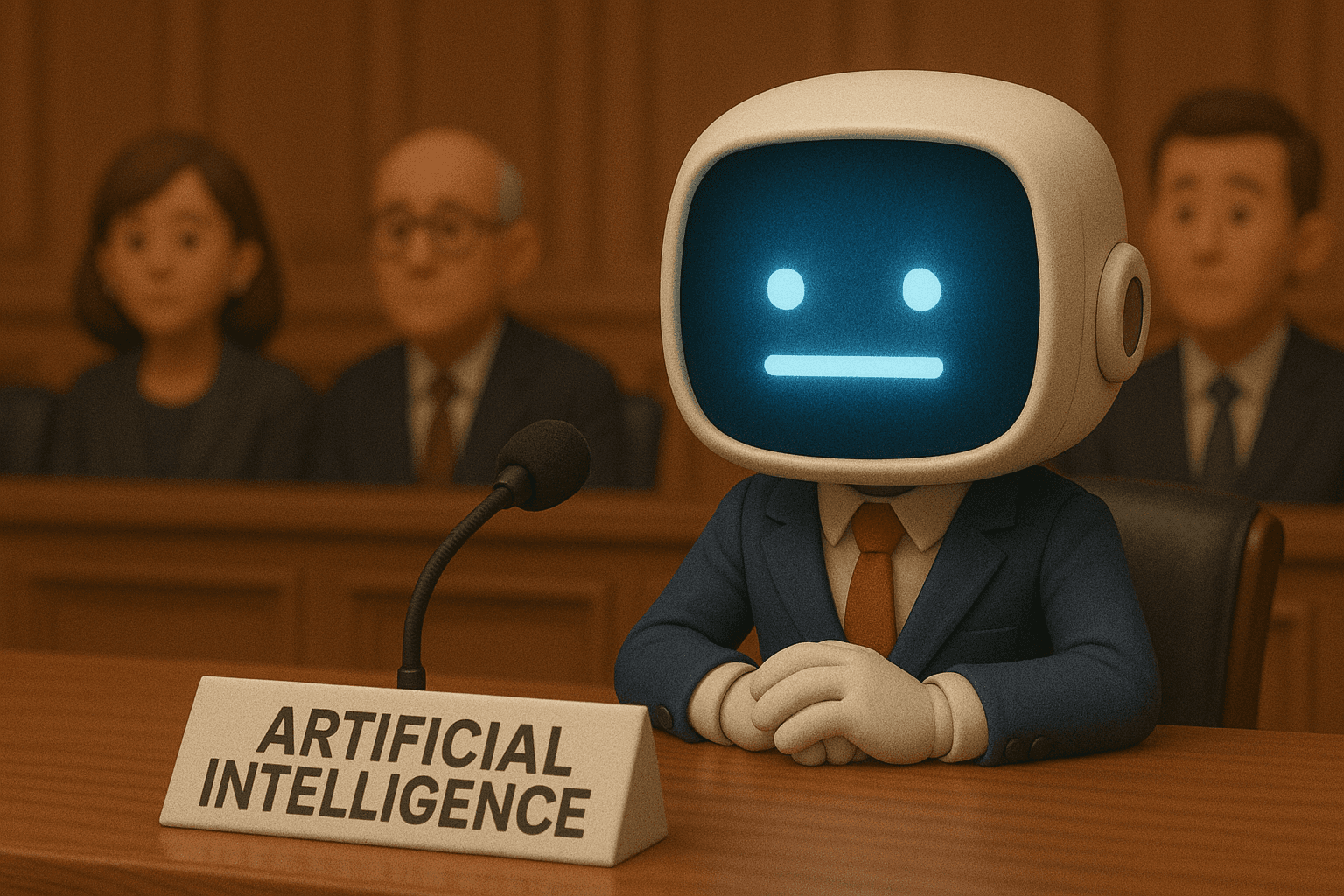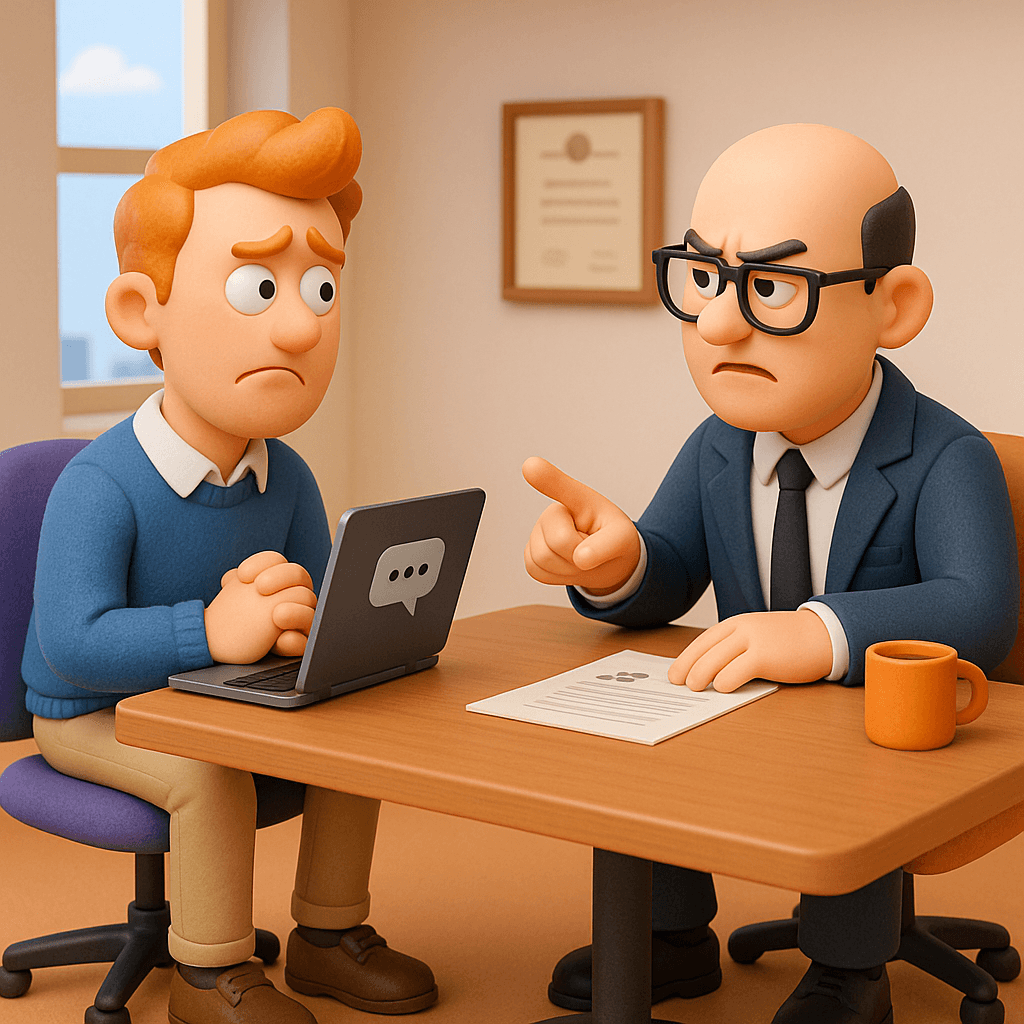
You're Not a Ventriloquist
Getting an interview in 2025 is hard. Like “apply-to-100-jobs-and-get-ghosted-by-97” hard. And because it’s hard, a whole cottage industry has popped up to whisper sweet, AI-generated nothings into your ear while you’re on Zoom trying not to sweat through your shirt.
You know the tools. The “real-time interview copilot.” The teleprompter app. The second-screen ChatGPT fairy godmother that promises you’ll sound brilliant, confident, and totally human.
You are hurting your chances of getting the job when using them in live interviews.
Not “use them better.” Not “use them only a little.” Stop. Because right now, the trade you’re making is brutally simple:
You’re risking the rarest resource in job hunting, an actual interview, for a tool that makes you look fake, and gets you disqualified the second someone suspects it.
That’s not strategy. That’s self-sabotage.
The Interview Is Scarce. Don’t Waste It.
If you’re thinking, “But I’m nervous, I need help,” fair. Everyone’s nervous. Interviews are weird tiny performances with rent money on the line.
But you need to understand the math of what you’re burning.
Multiple 2025 studies show that the average job seeker submits dozens to hundreds of applications per offer, and cold online applications convert to offers at something like 0.1% to 2%. In one aggregated funnel, out of 100 completed applications, only 4 to 6 people get interviews. 
Read that again.
And the market is not exactly handing out freebies right now. U.S. employers announced about 1.17 million job cuts year-to-date in 2025, while hiring plans fell to their lowest level since 2010. Translation: fewer seats, more people fighting for them. 
So if you finally get the call, and then you bring a robo-ventriloquist to the conversation… yeah, that’s a choice.
You’re Not Meryl Streep
Let’s talk about the execution gap.
Even if you think you’re being sneaky, real-time tools usually make you behave like a malfunctioning human.
Recruiters are trained to spot authenticity. Not because they’re psychic, but because humans have patterns. When those patterns break, alarms go off.
Common tells (that interviewers literally publish guides about):
Eye drift to a second screen, repeatedly.
Laggy response timing that doesn’t match natural thinking.
Overly polished, generic language with zero personal texture.
Tone mismatch, like your voice says “I’m nervous” but your words say “I was delighted to leverage cross-functional synergies.”
No follow-up agility, meaning you crumble when they dig deeper because the bot only prepped surface answers. 
The result is the same as reading lines badly in a play: you look present, but not alive. And hiring teams notice.
There are whole anti-cheating stacks now built to catch this, from behavioral signals to proctoring tech. The arms race is real. 
So your risk isn’t “maybe they’ll notice.”
Your risk is “they notice, and you are done.”
“But Everyone Uses AI Now.”
There’s a huge difference between using AI to prepare and using AI to perform for you in real time.
Practice answers, research the company, tighten your stories, calm your nerves. Great. Do it.
But don't outsource your brain while someone is actively evaluating… your brain.
Hiring managers get this difference, loudly.
A 2025 TopResume survey found 57% of hiring managers say real-time AI tools should never be used during interviews. Their reason is pretty obvious: they can’t assess your actual skill level if a bot is feeding you lines. 
So when candidates ask, “Is it allowed?” The answer from more than half the people who decide your fate is, “Absolutely not.”
Companies Are Banning It, Explicitly
This is not theoretical anymore. Major employers have moved from side-eyeing AI interview cheating to writing policies about it.
Amazon issued guidance in 2025 calling generative AI use during interviews grounds for disqualification, unless the interviewer explicitly allows it. Recruiters are told to warn candidates up front. 
Goldman Sachs has also warned applicants not to use AI or external help during interviews. 
And this is spreading because remote interviews made cheating easier, and hiring teams are sick of it. Fraud, deepfakes, whisper bots, teleprompters, the whole circus. Surveys and reporting show a meaningful chunk of hiring managers have already encountered AI deception in interviews. 
In other words, you’re not pulling a slick new move.
You’re walking into a bank holding a ski mask and saying, “Relax, it’s performance art.”
The Instant-Kill Problem
Here’s the part that’s hard to hear but useful: suspicion is enough.
Recruiters don’t need courtroom proof. They’re not obligated to argue with you about it. If you feel off, the interview ends, or you fall off the shortlist. Period.
Why?
Because in hiring, trust is the product. If the first time they meet you, you’re potentially faking competence, they immediately ask:
What else are you faking?
What happens when you don’t have a bot in your ear?
Are you safe to put in front of clients, teams, production systems, or literally anything expensive?
That’s why policies are strict and why outcomes are brutal. A lot of companies see this as integrity failure, not a minor assist. 
You might think you’re protecting yourself from nervousness.
They think you’re lying about who’s showing up to work.
“But AI Helps Me Sound Smarter.” Cool. So Does Preparation.
Here’s a counter-intuitive truth.
The way you actually get better at interviews is not by live-cheating. It is by building a small, repeatable set of real stories and practicing them until they’re yours.
AI is amazing for that part. Use it there.
Use AI before the interview:
Draft strong STAR stories (situation, task, action, result).
Pressure-test your answers, “poke holes in this.”
Generate likely questions for that exact role.
Help you translate your experience into their language.
Run mock interviews so you get used to thinking out loud.
But in the interview:
Show up as a real person.
A little messy, a little nervous, but coherent and honest.
If you blank, say you’re thinking. That’s normal.
If you need a second, take it. Also normal.
A human taking a moment to think looks like maturity.
A human reading answers looks like a hostage video.
What to Do Instead (That Actually Improves Your Odds)
If your goal is to land the job, not just survive the Zoom call, here’s the playbook that works in this market:
Prepare 5 core stories. One challenge you solved, one conflict you handled, one win you’re proud of, one failure you learned from, one “why this role” narrative.
Practice out loud. Not in your head. Out loud. Your brain needs reps in the medium you’ll perform in.
Build a “follow-up layer”. For every story, know the details underneath it. Metrics, tradeoffs, what you’d do differently. That’s where interviews are won.
Research like a detective. Most candidates show up with Wikipedia-level knowledge. If you bring real insight about their business, you’re instantly top tier.
Ask sharp questions. Questions are not for filling time. They’re for proving you think like someone already in the seat.
And yes, use AI to help you do all of that.
Just don’t bring it into the room.
We are here to help
SeeVee is built around the belief that your real edge is not a perfect script. It’s your actual story, with the context, nuance, and “I was there” details that make you you.
Our Voice AI interviews are designed to surface that authenticity at scale, not reward whoever has the best stealth teleprompter. So if you practice with AI and then show up honestly, you’re playing the game the right way, and you’re giving employers something they can trust.
That trust is what gets you hired. Not a bot saying “synergy” on your behalf.
You fought your way to the interview.
Do not hand the wheel to a real-time assistant and hope nobody notices. They notice. And even if they don’t “know,” they feel it. And feeling is enough.
You don’t need to be flawless.
You need to be real, prepared, and able to think on your feet.
So use AI like a coach, not a puppeteer.
Then walk into that interview and be the person they’re actually hiring.
Your future paycheck will thank you.